
Premise
The International Environmental Justice Committee (IEJC) was approved November 2021. Its goals are fostering the international psychology debate on the environmental crisis and the challenges that mankind is likely to face in the next and remote future, having an impact on human individual and collective psychological processes, social inequalities, environmentally conscious conducts and eventually the survival of the human collectivity as we know it.
The forms of relationships that humans have established among themselves and with non-human components of the ecosystem seem to jeopardize the survival of mankind itself and of a large part of the planet’s life as we know it.
Environmental challenges involve not only issues related to anthropic action in global warming and pollution, but also the reduction of diversity, the oppression of first nations and original communities, social and economic injustices related to environmental and colonial exploitation, environmental migrations, the preservation of traditional cultures, the sanitary crises produced by anthropic action on environment, and so on.
All these phenomena affect the human psyche in forms clinically significant such as environmental trauma, environmental grief, and solastalgia. Yet, in general they concern the ecosystemic nature of human-environment relationships.
The idea of the committee is born from the experience of the Div 52 Taskforce on Covid-19, which had the opportunity to reflect upon the “psychology of pandemic” and the psychologic, social, politic, economic and ethic consequences that have become visible during the pandemic. They realized these are one of the manifold manifestations of a general crisis of the current human way of relating to the ecosystem. Existing approaches, such as environmental psychology, developmental sciences, ethnoecology and psychogeography, can be a useful starting point to open a dialogue within international psychological sciences.
Mission
The task of the IEJC is to produce and collect information, events of discussion and proposals to have environmental and inequalities challenges as core interest of international psychology, concerning theoretical, professional, therapeutic, educational and ethical aspects of the human conduct in the ecosystem.
The types of actions that the committee can undertake are:
- Collect and make available sources about the psychological aspects of environmental challenges;
- Promote events (webinars, conferences, scientific collaborations) at international level;
- Organize a special issues of IPP journal
- Promote networking and joint research projects at international level to advance knowledge about psychology of EG;
- Promote formative activities (webinars; courses; etc.) for students and professionals;
- Promote interdisciplinary collaboration with other international actors;
- Create a collaborative knowledge base.
Join the Committee!
If you want to contribute to the solutions of environmental challenges and to promote environmental justice through research and intervention, just join the committee. Write an email to lucatateo(at)gmail.com
Committee Members
 Luca Tateo, Chair, Professor of Theory, Epistemology and Methodology of Qualitative Research at the Department of Special Needs Education. University of Oslo, Norway. He is co-editor in chief of the Journal “Human Arenas. An Interdisciplinary Journal of Psychology, Culture, and Meaning”, Springer, and is editor in chief of the book series “Innovations in Qualitative Research”, Information Age Publishing.

Erinn C. Cameron, M.A. is a first-generation university student and doctoral candidate in clinical psychology at Fielding Graduate University. She lives on an island in the Salish Sea, where she enjoys eco-living, sailing, making music, cooking, and gardening with her family. She has lived in several countries and participated in academic and humanitarian work across the globe. Her ongoing research and clinical work focus on human rights, gender inequality, climate change, human trafficking/modern slavery, and women’s health. She is the current student chair for the APA Div 52 and International Council of Psychologists boards. She is also co-chair of the Div 52 Scientific Committee for Cross-Cultural Research, co-editor of the International Psychology Bulletin, and adjunct faculty at Seattle Pacific University.

Niklas A. Chimirri is Associate Professor in Social Psychology of Everyday Life at the Department of People and Technology at Roskilde University, Denmark. Both his teaching and research explore the relevance of communication technology for children’s and adults’ conduct of everyday life, with a focus on technology’s ethical implications for designing collaborative research across generational and human-nonhuman thresholds. The aim is to develop an ecologically and socially sustainable psychology of everyday life that interrelates audience research, participatory design studies, and intergenerational childhood research with the environmental humanities.
 Gonzalo Bacigalupe, EdD, MPH, is Professor of Counseling Psychology, School of Education and Human Development, University of Massachusetts Boston and Research Associate of CreaSur, Universidad de Concepción in Chile. He is a board director of Family Process Institute (2018-2021). As a researcher and disaster resilience activist, he has been actively engaged in the COVID-19 pandemic as part of an emerging grassroots network of public health professionals, social scientists, and experts mobilizing to change the COVID-19 strategy to prevent the contagion in Chile.
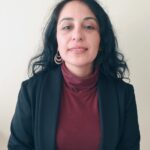 Camila Pérez, Ph.D., is an indigenous psychologist who is a member of the Mapuche people. Her research focuses on the sense of indigeneity and the role of people in the production of cultures through the meaning-making process. Taking the case of the Mapuche people, she has explored the interconnectedness between human beings and nature and its relevance in the transmission of ethnic identity in diasporic contexts.
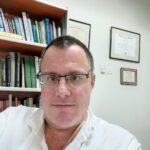 Mike Campbell, PhD is Senior Lecturer in Behavioural Science/Psychology and Deputy Dean (Research & Graduate Studies) in the Faculty of Medical Sciences, The University of the West Indies, Cave Hill Campus, Barbados. He teaches in clinical psychiatry and publishes in the areas of health psychology and bioethics. He supports the Caribbean Public Health Agency as vice chair of the CARPHA Research Ethics Committee and a member of the COVID-19 Expert Advisory Group. He is a member of the Disaster Mental Health Committee of the Caribbean Alliance of National Psychology Associations and past president of the Barbados Society of Psychology.
 Allison Cohen, B.A. (she/her) is a doctoral student in Counseling Psychology at the University of Utah and a passionate environmentalist. Her research interests and clinical work include exploring the intersections of climate change and psychosocial suffering through a multicultural lens. Her prior academic expertise lies in International Affairs and Global Environmental Health, and she is eager to incorporate these areas into her work as a Counseling Psychologist.
Former Members
Pina Marsico, Ph.D., former co-Chair, Associate Professor of Development and Educational Psychology at University of Salerno (Italy).
Gregory Kelly Gormanous, Ph.D., is Professor Emeritus of Psychology, Louisiana State University Alexandria (USA).
Paul Rhodes, Associate Professor, University of Sydney, Convener Psychologists for Social Justice:Co-Chair Critical and Post-Structural Psychology, ICQI:Consultant St Vincent’s Private Hospital:Editor Human Arenas:Member Sydney Environment Institute.
Nadine Clopton, Founder & President, Conscious Consulting, LLC; Program Manager, Rodale Institute; Vice President, Global NGO Executive Committee; NGO Youth Representative to the United Nations, Caring & Living As Neighbors (CLAN)
Lawrence Gerstein, Ph.D. is a Ball State University George and Frances Ball Distinguished Professor of Psychology-Counseling and Director of the Center for Peace and Conflict Studies.